
4Th Call For Proposals
(August 25, 2025 - November 7, 2025)
The Belize Fund invites interested and eligible non-government entities to submit a concept paper in an annual Call for Proposal, requesting grant funding for their projects. If the concept paper is accepted, the entities will be invited to develop and submit a full proposal.
Concepts should focus on coastal and marine areas of Belize but can also target terrestrial areas, provided that there is a direct link between the funding and coastal and marine outcomes in alignment with the following Thematic areas.
Support activities that promote responsible and sustainable fisheries to help rebuild stocks. Priority areas include, but not limited to:
- Enhance value-added fisheries products
- Promote sustainable fishing practices
- Improve fisheries product traceability
- Catch data monitoring programs
- Capacity building for associations and fishers
- Other fisheries pilot project.
Priority areas for proposed projects should include, but are not limited to, one or more of the following:
1. Enhance value-added fisheries products
- Enhance marketability of fisheries products (e.g. ready-to-cook options, improvements in storage, packaging and product quality assurance measures)
2. Promote sustainable fishing practices
- Adopt or test sustainable fishing gear (e.g. lobster traps with size-selective grids, Hawaiian sling)
- Adopt barbless hooks to reduce injury and mortality in catch and release fishing
- Integrate technology to support sustainable fishing practices
3. Improve fisheries product traceability
- Adopt systems or tools for accurate catch data log submission
- Enhance product processing, handling, labeling and distribution
4. Catch data monitoring programs
- Train fishers on proper data collection
- Conduct data collection of fish stocks
- Support the use of electronic applications for recording catch logs
5. Capacity building for associations and fishers
- Train fishers to monitor and report illegal activities in partnership with co-managers and FiD.
- Training programs to enhance practical skills in areas such as improved fishing techniques, selective gear and sustainable fishing methods.
6. Other fisheries pilot project
- Initiatives that explore new fisheries such as king crab, deep sea fishing, and increase fish production.
- Innovations aimed at increasing fish production, diversifying catch and reducing bycatch.

Supports new ocean-friendly and sustainable blue businesses that are good for Belize’s Blue Economy. Priority areas include, but are not limited to:
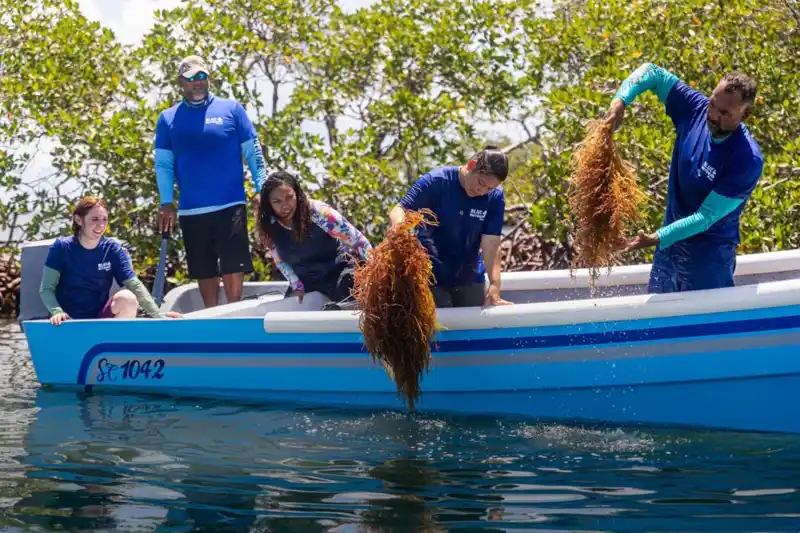
- Mariculture pilot projects (new ways to grow seafood)
- Reef-friendly tourism (snorkeling and scuba diving, and other water-based tourism activities)
- Circular economy projects that reduce marine litter
- Sustainable marine transport solution
- Value-added marine biodiversity products
- Establishing wastewater treatment systems and water quality management
Priority areas for proposed projects should include, but are not limited to, one or more of the following:
1. Mariculture feasibility projects
- Developing and testing sustainable farming or harvesting models for species such as seaweed, sea cucumbers and king crabs.
2. Reef- friendly tourism
- Eco-conscious tourism programs/tours for snorkeling, scuba diving, sport fishing, and other water-based tourism activities, that incorporate reef-positive practices.
3. Circular economy projects that reduce marine litter
- Reducing, reusing, and recycling plastics
- Circular economy models and community-based recycling initiatives
4. Sustainable marine transport solution
- Improving efficiency, safety, and reducing environmental footprint of marine transport.
5. Value – added marine biodiversity products
- Development of sustainably harvested marine products or bi-products such as nutraceuticals, cosmetics, crafts and accessories.
6. Establishing wastewater treatment systems and water quality management
- Installation or upgrading of environmentally sound wastewater treatment systems in resorts, lodges and other coastal tourism establishments.
- Reducing nutrient or sediment loading to prevent marine pollution and protection sensitive ecosystems such as coral reefs, mangroves and seagrass.
Types of Grants
Small Grant
Awards up to
BZD$50,000
Not exceeding 1 year (no co-financing required)
BZD$50,000
Not exceeding 1 year (no co-financing required)
Medium Grant
Awards between
BZD$50,000 and $150,000
Not exceeding 2 year (10% co-financing required)
BZD$50,000 and $150,000
Not exceeding 2 year (10% co-financing required)
Large Grant
Awards between
BZD$150,000 and $500,000
Not exceeding 2 -3 year (25% co-financing required)
BZD$150,000 and $500,000
Not exceeding 2 -3 year (25% co-financing required)
Community Grant
Awards up to
BZD$50,000
Not exceeding 1 year (no co-financing required)
BZD$50,000
Not exceeding 1 year (no co-financing required)
Eligibility Criteria for Regular Grants
Eligible entities can apply for grants provided that they:
- are a registered entity in Belize;
- have existed and been operational in Belize for a minimum of one (1) year prior to submission of the application; and
- can demonstrate successful project and financial management.
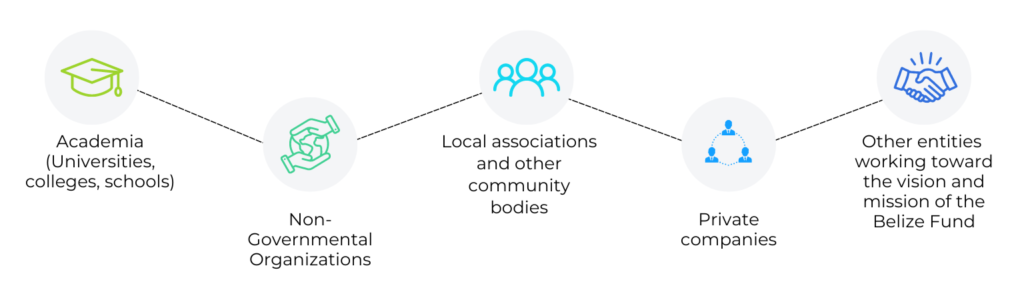
Who can apply for the Regular Grants
Eligibility Criteria for a Community Grant
Eligible entities can apply for grants provided that they:
- are a registered entity in Belize (even if less than a year);
- located in a coastal community or area;
- active in Belize (must be able to demonstrate activity for at least a year, have a functional governing or executive body conducting meetings regularly)
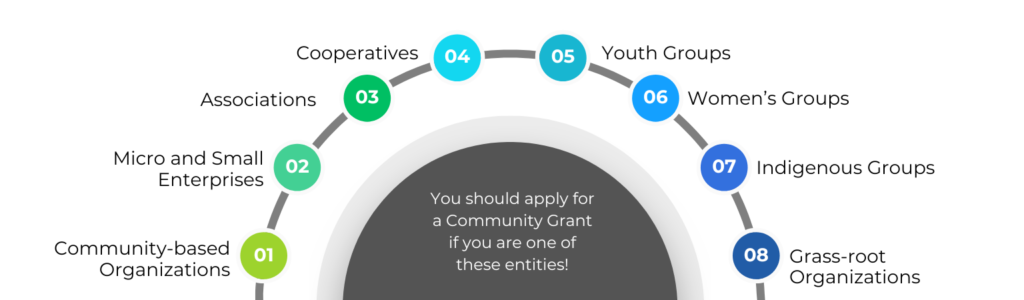
Who can apply for the Regular Grants
Community Grants will prioritize, but not limited to, projects that:
1. Reduce marine litter, plastic waste, or nutrient pollution
- Adopt use of biodegradable products or reusable items.
- Develop project based on recycling of plastics.
- Use proper sewage treatment plans that remove contaminant from wastewater.
- Reduce use of fertilizers/pesticides and limit them from getting into waterways.
2. Promote stewardship of coastal and marine resources
- Data collection programs(fish catch data, monitoring of coral bleaching, illegal fishing, dredging, mangrove cutting, and other illegal activities)
- Clean up program (above and under water)
- Build community stewardship for coastal and marine resources (education outreach, community watch groups, community researchers, etc.)
3. Advance blue economy and blue business development
- Business start ups that depend on the blue space and follow sustainable practices (jewelry from marine products such as conch shell, lionfish fins, seaweed, etc.)
4. Protect fragile ecosystems and restore degraded habitats.
- Community mangrove, seagrass and coral reef protection activities
5. Promote sustainable fishing practices.
- Adopt or test use of more sustainable fishing gear (e.g. lobster traps with size selective grids, Hawaiian sling, etc.)
- Adopt size limits to ensure harvest of mature finfish, conch and lobster
- Release of juvenile and breeding females
6. Promote eco- tourism and reef-friendly tourism.
- Eco-conscious tourism tours that incorporate reef-positive practices (use of reef safe sunscreen, follow rules on carrying limits for areas, and put measures in place when interacting with corals or marine species)
- Develop and promote new tourism activities (experiential tours- A day in the life of a fisherman)
7. Organizational capacity building for fisher groups, community groups, youth and women.
- Training in fishing techniques, fish handling and processing.
- Office management and skills development
Proposal Development and Implementation Process for Community Grant
- Entities with an accepted concept paper will be assigned a proposal writer to help with and guide the development of their proposals.
- A project steering committee will be formed to guide the implementation of the projects with approved proposals.
- Entities will be responsible for coordinating and implementing the approved work plan
- The Belize Fund will provide support for the financial management of the project, producing regular financial reports.
Timeline for 4th Call for Proposals
